
When a renovation begins to take shape in your imagination, one question tends to follow quickly: Do I need an architect, an interior designer, or both?
The answer depends on the scope of your vision. But more importantly, it depends on how you want the experience to unfold.
At Quartersawn Design Build, we believe the most compelling homes are born when architecture and interiors are conceived together; when the structure and the soul of a space evolve in tandem. For Twin Cities homeowners, that integrated approach often makes the difference between a renovation that simply functions and one that feels intentional at every turn.
Before exploring how design-build brings the best of both worlds together, it helps to understand what each discipline traditionally encompasses.
What Architectural Design Shapes
Architectural design concerns itself with the framework of your home; the proportions, the circulation, the structural integrity that quietly supports daily life. It is both art and engineering.
An architect considers how space flows, how light enters, how additions merge with original construction, and how every modification complies with building codes and municipal guidelines.
Architectural design typically includes:
- Reconfiguring floor plans
- Removing or relocating walls
- Designing additions
- Modifying rooflines or exterior façades
- Structural engineering coordination
If you are expanding a kitchen into an adjacent room, introducing larger windows to capture southern light, or adding a second-story suite, architectural design ensures those moves feel seamless rather than appended.
It is about honoring the “bones” of a home, while thoughtfully evolving them.
What Interior Design Refines
Once the structure is resolved, interior design brings texture, tone, and livability into focus. It answers a different set of questions: How will the cabinetry age over time? Where should lighting layers fall to flatter both morning routines and evening gatherings? What materials feel timeless rather than trend-driven?
Interior design shapes:
- Cabinetry, tile, countertops, and flooring
- Lighting plans and fixture selections
- Furniture layout and circulation
- Color palettes and finish harmonies
- The subtle details that elevate daily rituals
For a kitchen redesign within an existing footprint, interior design becomes the guiding force, ensuring every material and measurement supports both function and beauty.
It is less about altering walls and more about refining how life unfolds within them.
Where Architecture and Interiors Converge
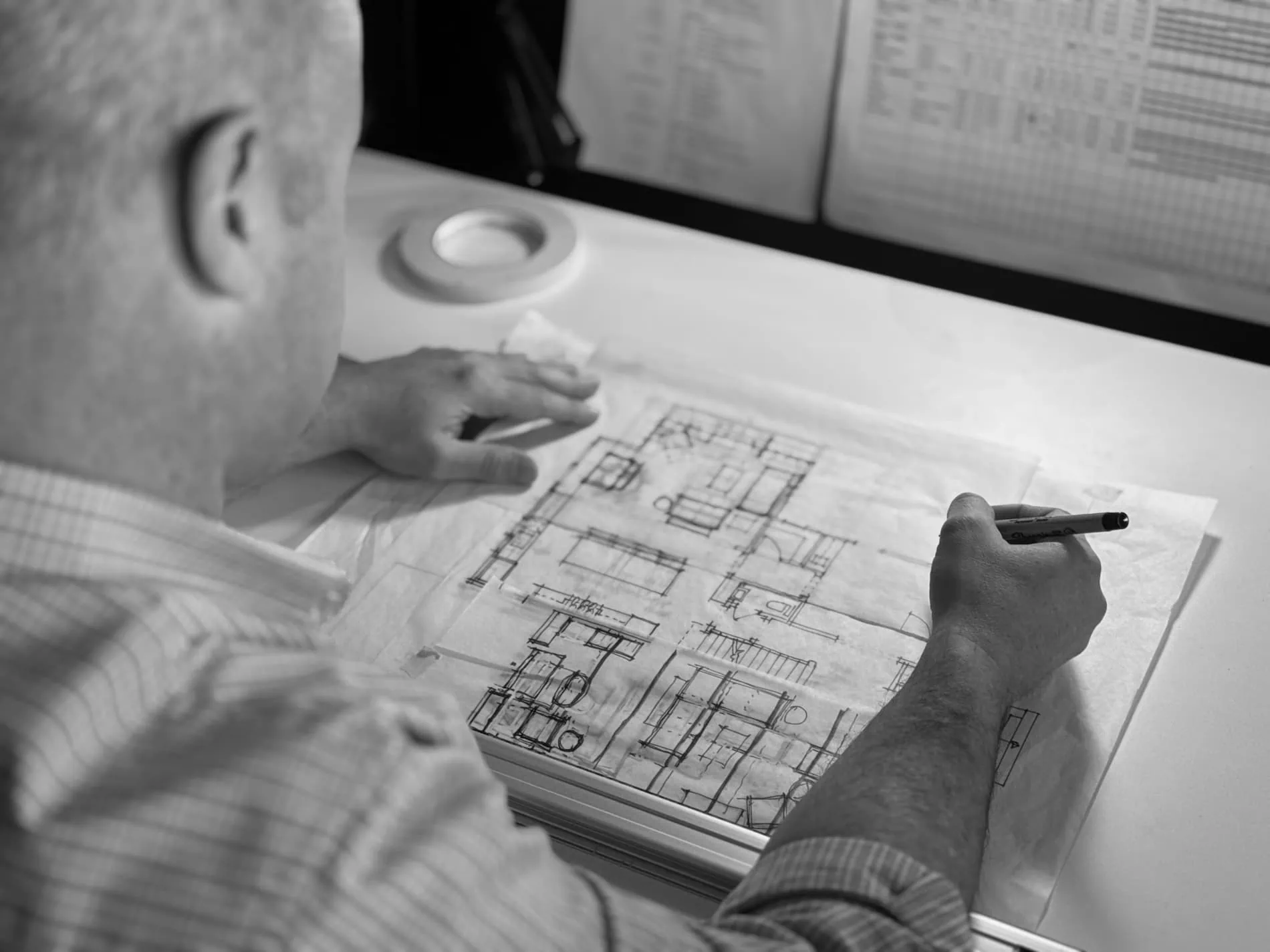
The most remarkable renovations do not treat architecture and interiors as separate conversations. They inform one another from the outset.
Consider a kitchen expansion: An architect may design a generous island to anchor the space. An interior designer ensures the island’s proportions support comfortable seating, appropriate lighting scale, and cabinetry detailing that aligns with the home’s architectural language.
When these disciplines operate independently, friction can arise: redesigns, budget surprises, aesthetic compromises.
When they collaborate from day one, cohesion becomes inevitable.
The Design-Build Advantage
This is where a design-build firm distinguishes itself.
At Quartersawn Design Build, architectural planning, interior design, and construction live under one roof. Instead of navigating multiple firms, homeowners work with a unified team. One that aligns creative vision with real-world execution from the earliest sketches.
The result is a process that is:
- Strategically cohesive
- Budget-conscious from inception
- Streamlined in communication
- Grounded in craftsmanship
Structure and style are not competing priorities. They are developed simultaneously, informed by the same shared vision.
In a city like Minneapolis, where historic character and modern living often intersect, this integration ensures additions feel original, kitchens feel intentional, and finishes support the architecture rather than compete with it.
How to Determine What Your Project Requires
If your plans include structural modifications: moving walls, expanding square footage, altering exterior elements, architectural design is essential.
If your focus centers on material refinement, cabinetry redesign, lighting updates, or a curated refresh within an existing layout, interior design may be the primary driver.
If your renovation blends both structure and style, as many transformative projects do, an integrated design-build approach offers clarity and continuity.
A Thoughtful Path Forward
Ultimately, the distinction between architectural and interior design is less about hierarchy and more about harmony. One defines the form. The other refines the experience.
For homeowners seeking a renovation that feels considered from foundation to finish, bringing these disciplines together from the start is not simply efficient; it is elevated.
And when structure and soul are shaped side by side, the result is not just a remodeled house. It is a home that feels entirely your own. Let’s reimagine your home.