
There’s something magnetic about buying a fixer‑upper. The promise. The potential. The thrill of imagining what a tired old house could become with the right vision. It’s easy to get swept up in the fantasy—especially when TV shows make it look like you can transform a whole house between commercial breaks.
But in the real world, turning a dated property into your forever home takes more than optimism and a sledgehammer. It takes strategy, clarity, and knowing what you’re actually looking at when you walk through that front door.
At Quartersawn, we help buyers evaluate homes before they buy them. We look past the surface, past the staging, past the questionable paint colors, and into the bones of the house. We help you understand what’s possible, what’s practical, and what’s going to devour your budget faster than you can say “open concept.”
If you’re searching for a fixer‑upper with real potential, here are the core things we pay attention to.
1. Cosmetic Problems Are Fine
A house can be ugly. That’s not a dealbreaker. In fact, ugly is often where the best opportunities hide.
Peeling wallpaper, worn carpet, dated cabinets, mismatched light fixtures—these are surface‑level issues. They’re fixable, predictable, and relatively affordable. A home with cosmetic flaws is often priced lower, giving you more room in your budget to create something beautiful.
But when you start seeing signs of foundation movement, water intrusion, sagging floors, or major mechanical failures, that’s when the math changes. Structural repairs can be done, but they’re rarely cheap and never optional. Knowing the difference between “needs a facelift” and “needs a rescue mission” is essential.
2. The Size Matters More Than the Décor
You can change a layout. You can rework walls, widen openings, shift traffic flow, and rethink how rooms connect. But what you can’t do is magically Xerox the house and make it 20% bigger.
Square footage is one of the few things in a home that has real, immovable limits. If the footprint is too tight, the ceilings feel low, or the overall volume just isn’t there, no amount of clever design is going to turn it into the spacious home you’re envisioning. Décor can distract you, but size determines what’s truly possible.
When you’re evaluating a fixer‑upper, pay attention to the scale of the rooms, the width of hallways, the ceiling heights, and the overall proportions. A home with good volume—even if it’s chopped up or dated—gives you flexibility. A home that’s simply too small for your long‑term needs will always feel like you’re trying to squeeze your life into a space that wasn’t built for it.
3. Original Kitchens and Baths Are Hidden Gems
A dated kitchen or bathroom isn’t a red flag—it’s an opportunity.
When a home still has its original cabinetry, tile, or layout, you’re working with a clean slate. You’re not paying for someone else’s half‑hearted remodel or trendy choices that aged poorly. You get to design the space exactly the way you want, and your investment goes further because you’re not undoing poor previous work.
Original spaces often reveal better craftsmanship, better materials, and better proportions than many mid‑remodel updates.
4. Pay Close Attention to the Staircase
Stairs are one of the most overlooked elements in a home search—and one of the most expensive to change later.
If you’re dreaming about adding a second story, reconfiguring the upper level, or improving circulation, the stair location becomes a major factor. Moving a staircase is complex, costly, and often constrained by building codes, especially in older homes with tight footprints.
A well‑placed staircase gives you flexibility. A poorly placed one limits your options before you even begin.
5. Original Details Are Worth Their Weight in Gold
One of the biggest advantages of buying an older home is the craftsmanship you simply can’t replicate affordably today.
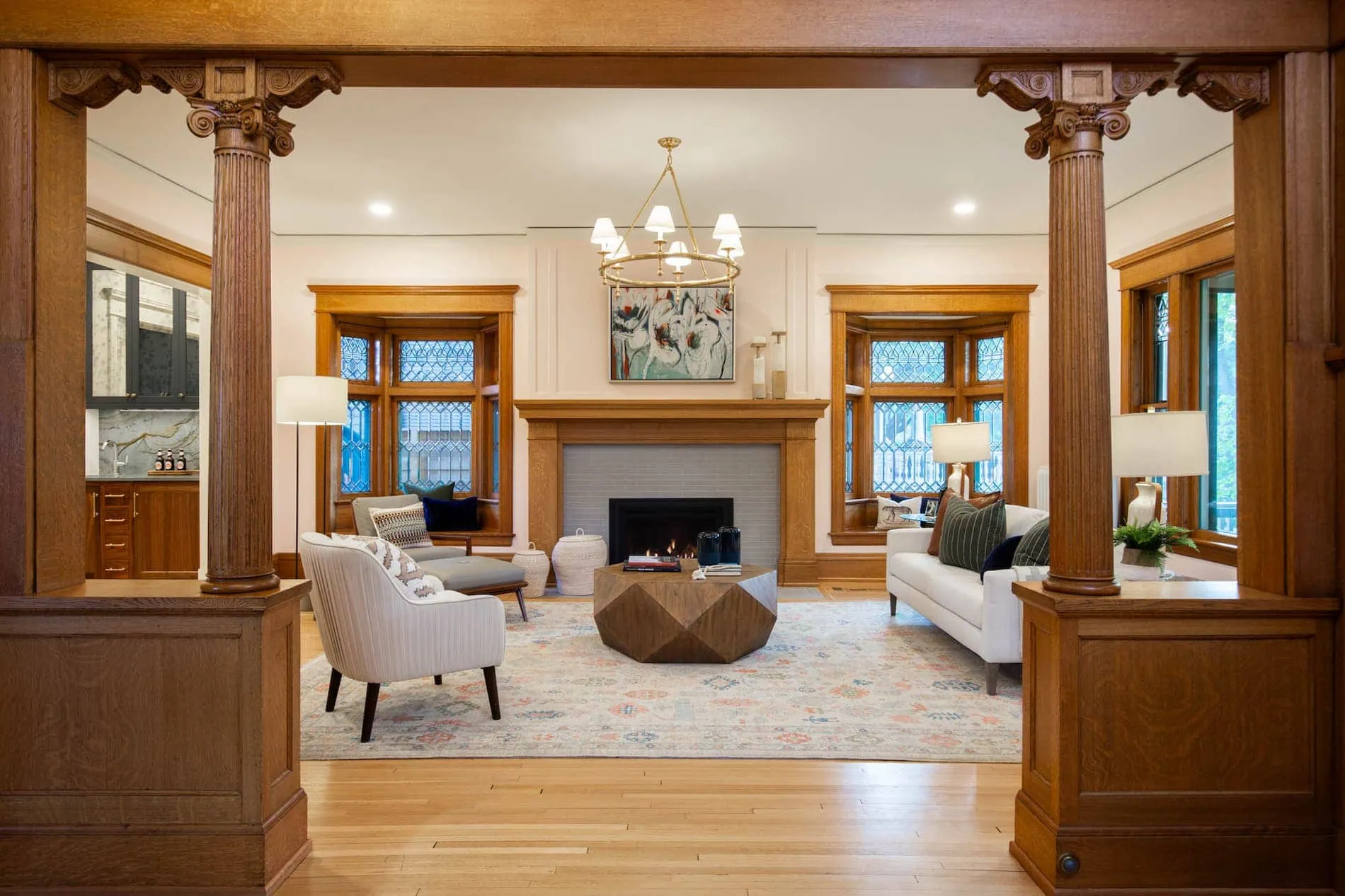
Solid wood doors. Intricate trim profiles. Coved ceilings. Built‑ins. Plaster walls. These details bring warmth, character, and authenticity to a home—and replacing them is expensive. When you find a house with intact original features, you’re not just buying charm; you’re buying value.
These elements become the foundation of a renovation that feels timeless rather than trendy.
6. Notice What’s Missing
Sometimes the best fixer‑upper isn’t the house that checks every box—it’s the one that checks most of them and leaves room for smart additions. If the home fits your lifestyle but you know you’ll eventually want a mudroom, a sunroom, a larger entry, or a more functional back‑of‑house zone, that’s actually a great opportunity.
Additions are where you can create the spaces older homes rarely have: a true drop zone for Minnesota winters, a sun‑filled room for morning coffee, or a transition space that makes the whole home feel more intentional. When the core of the house works and the lot allows for expansion, adding what’s missing can elevate the entire property in a way that feels seamless and custom.
A fixer‑upper with a strong foundation and a few missing pieces is often a better long‑term investment than a house that’s “almost perfect” but can’t grow with you.
Want a Second Set of Eyes Before Buying a Fixer Upper? That’s Where We Come In
Evaluating a fixer‑upper is part art, part science, and part knowing what things really cost. Realtors are fantastic at understanding market value, but renovation feasibility is a different skill set entirely.
We offer consulting services—both virtual and in‑person—to help you:
- Assess the true potential of a home
- Identify red flags before they become your problem
- Understand realistic renovation costs
- Prioritize projects based on your goals and budget
- Compare multiple homes with clarity and confidence
Our goal is simple: help you choose a home that can become the forever home you’re imagining, without blowing your budget or your sanity.
If you’re ready to start your search—or if you’ve already found a home you’re curious about—we’d love to help you see what’s possible.