
A well-designed mudroom is one of the most valuable spaces in a Minnesota home during winter. Snow-covered boots, wet jackets, and muddy paws can quickly create clutter and damage flooring throughout the house. The right mudroom design provides durable materials, efficient storage, and comfortable amenities that keep your home organized throughout the cold season.
At Quartersawn, we design and build custom mudrooms that balance functionality with thoughtful craftsmanship, helping homeowners create welcoming entryways that stand up to harsh Minnesota winters.
What Flooring Works Best in a Winter Mudroom?
The best mudroom flooring for snowy climates is durable, moisture-resistant, and easy to clean. Ceramic tile and natural stone are among the most popular materials because they withstand water, salt, dirt, and frequent foot traffic. Textured finishes can also improve slip resistance during wet winter months. Additional flooring considerations include:
- In-floor radiant heating for added comfort
- Porcelain or ceramic tile for durability
- Natural stone for a timeless appearance
- Waterproof grout systems
- Non-slip entry mats
Project Example: A Minneapolis mudroom remodel featuring durable stone flooring and bold blue cabinetry designed to handle winter traffic while maintaining a sophisticated aesthetic.

How Can You Add More Storage to a Mudroom?
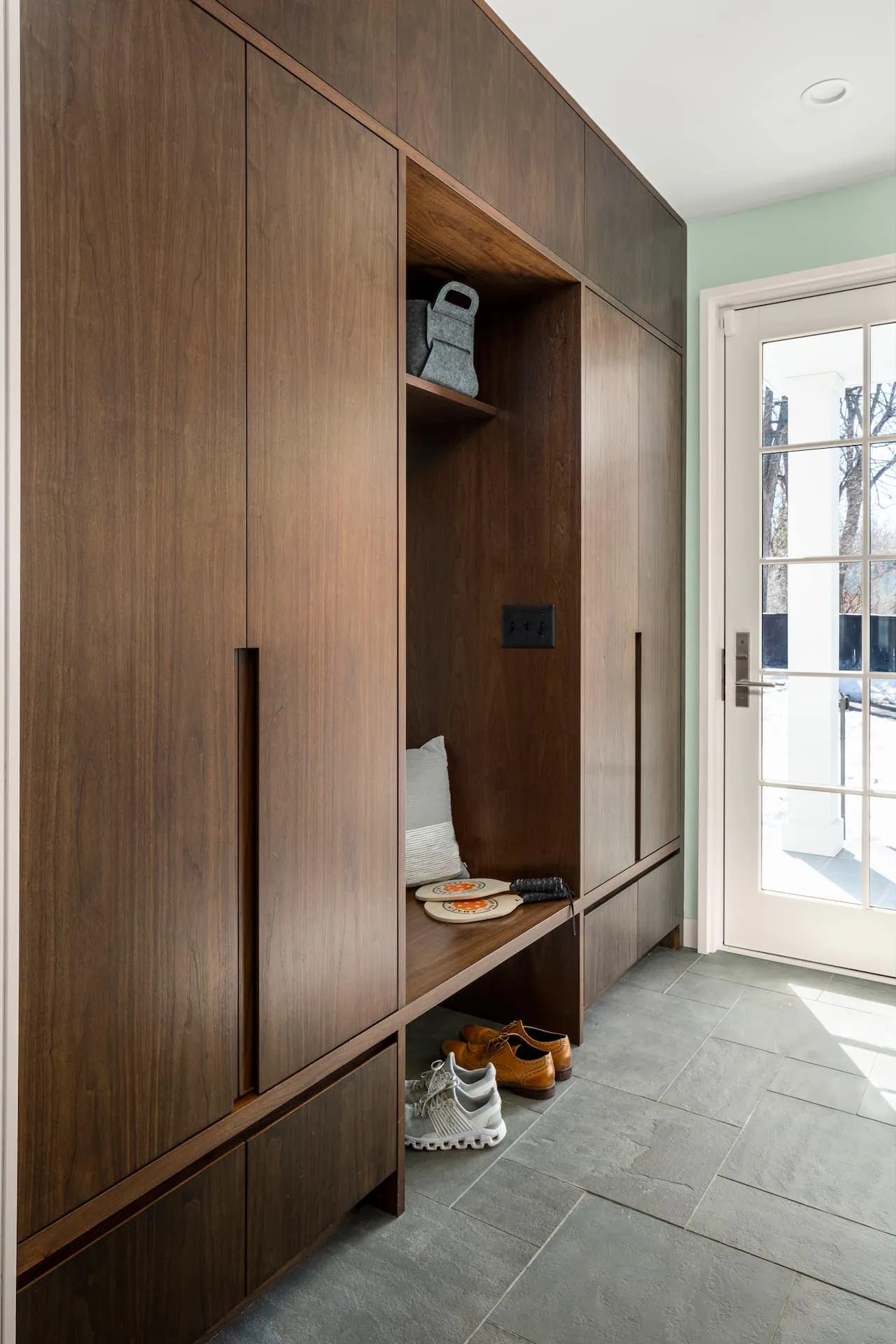
The most effective mudrooms include designated storage areas for every family member. Built-in cabinetry, lockers, cubbies, and hooks help prevent clutter while maintaining a clean appearance. A storage bench creates a convenient space to remove boots and conceal seasonal gear. Popular mudroom storage ideas include:
- Individual family lockers
- Hidden storage cabinets
- Open shelving for everyday items
- Pull-out baskets for gloves and hats
- Bench seating with built-in storage
- Shoe organizers and boot trays
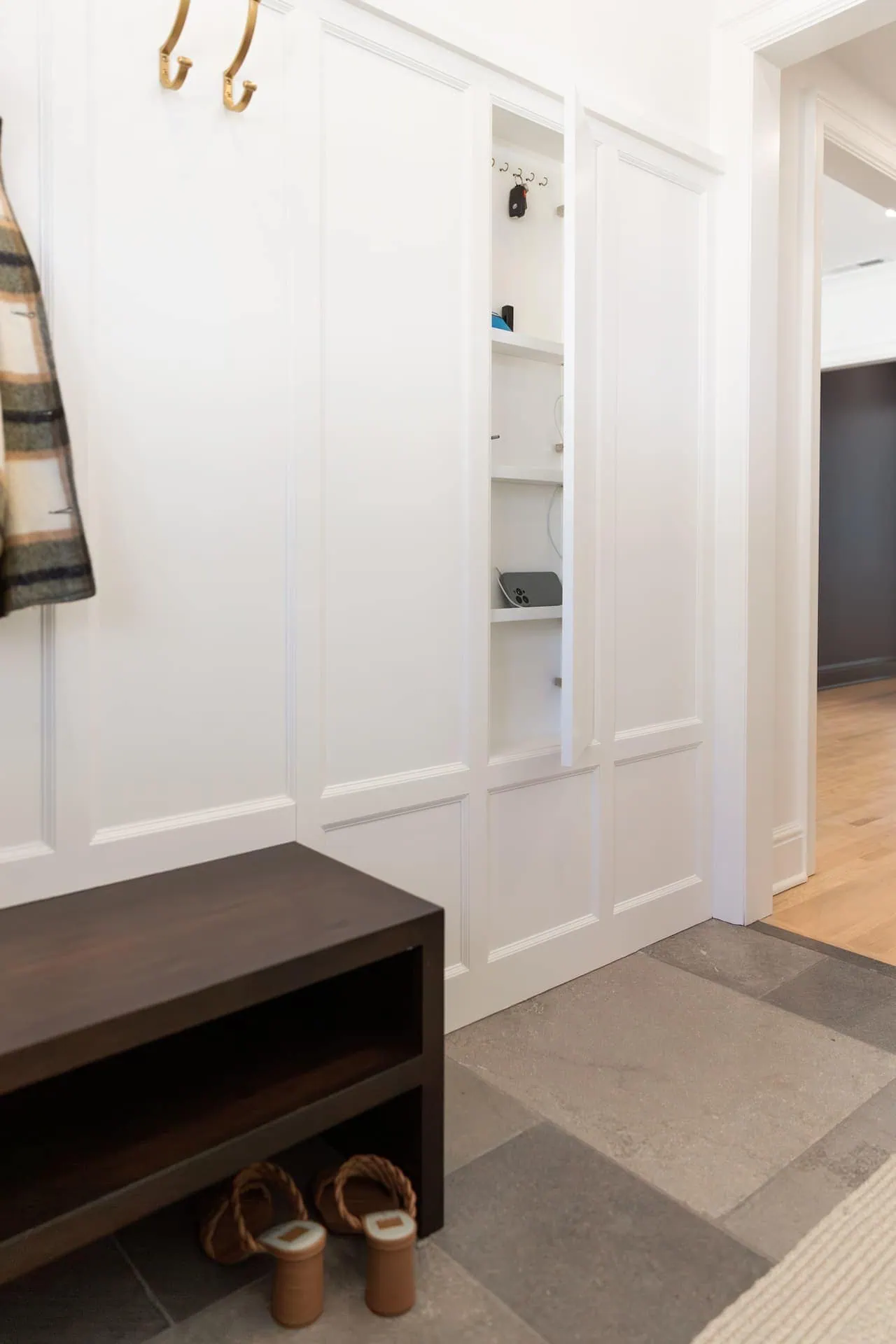
Project Example: In our Spanish Colonial renovation, custom walnut cabinetry concealed extensive storage behind elegant millwork, creating a highly functional space without visual clutter.
What Is the Ideal Mudroom Layout?
A functional mudroom layout separates activities into clearly defined zones. The most successful designs include dedicated areas for:
- Hanging coats and jackets
- Storing shoes and boots
- Drying wet items
- Organizing backpacks and sports equipment
- Receiving packages and mail
For larger spaces, homeowners may also benefit from:
- A utility sink for muddy boots and pets
- Charging stations for electronics
- A family command center
- Built-in desks for homework or household management
By tailoring the layout to your family’s daily routines, every square foot works harder and supports better organization.
Project Example: An Edina mudroom designed with dedicated zones for each family member, improving both storage capacity and daily functionality.

Should You Install Heated Floors in a Mudroom?
Yes. Heated floors are one of the most requested mudroom upgrades for Minnesota homeowners. Radiant floor heating helps:
- Dry wet boots faster
- Reduce moisture buildup
- Improve comfort during winter
- Protect flooring from prolonged moisture exposure
Proper ventilation is equally important. Exhaust fans and strategically placed windows help circulate air, preventing mold and mildew while keeping the space fresh year-round.
Project Example: In our Linden Hills Tudor renovation, radiant floor heating transformed the mudroom into a warm transition space between the outdoors and the home’s interior.
How Do You Make a Mudroom Feel Stylish?
A mudroom should be as beautiful as it is practical. Decorative finishes and personalized details can elevate the space while maintaining durability. Design features we often incorporate include:
- Statement wallpaper
- Painted beadboard
- Custom millwork
- Decorative hooks
- Woven baskets
- Durable designer rugs
- Family message boards
Project Example: One recent Minneapolis project featured smoky green beadboard, playful wallpaper, and custom storage solutions that created a welcoming space full of character.

Frequently Asked Questions About Mudroom Design
What is the most durable flooring for a mudroom?
Porcelain tile, ceramic tile, and natural stone are typically the most durable and water-resistant flooring materials for mudrooms.
How much storage should a mudroom include?
Ideally, every family member should have a dedicated storage zone with hooks, shoe storage, and space for seasonal gear.
Is radiant floor heating worth it in a mudroom?
In cold climates like Minnesota, radiant heating improves comfort, helps dry wet footwear, and can reduce moisture-related issues.
What size should a mudroom be?
While every home is different, a functional mudroom should provide enough room for circulation, seating, storage, and wet-weather gear management.
Can a small mudroom still be functional?
Yes. Built-in cabinetry, vertical storage, wall hooks, and storage benches can maximize efficiency in compact spaces.
Create a Mudroom That Works All Winter Long
A thoughtfully designed mudroom protects your home from snow, salt, moisture, and everyday clutter while providing a welcoming transition from outdoors to indoors. Through durable materials, custom storage solutions, and carefully planned layouts, homeowners can create spaces that remain organized, comfortable, and beautiful throughout the winter season.
If you’re planning a mudroom renovation in Minneapolis, Edina, or the greater Twin Cities area, schedule an introductory call to discuss a custom design tailored to your home and lifestyle.